10 Famous Literary Travel Destinations For Book Lovers
- Road Trip
- get inspired

Literary travel is one of the fastest-growing niches in the travel world right now, and book lovers are taking notice. It's the practice of visiting the real places tied to famous authors, their childhood homes, and the settings that shaped classic literature, turning a reading list into an actual trip. Literary festivals fill up faster every year, literary tours through cities like Boston and New York sell out months in advance, and readers are increasingly choosing destinations the way movie fans plan set-jetting trips: based on the stories that moved them.
But most literary tourism content assumes you're flying into one city, booking one hotel, and leaving. That works fine if you only care about one author. It falls apart the moment you want to see where Louisa May Alcott wrote Little Women and then trace Laura Ingalls Wilder's route across the prairie a few states away. Few travelers have the time or budget to book five separate flights and five separate hotel stays to chase down American literature's most famous landmarks.
An RV solves that problem. Instead of picking one city, you can build an actual route, spend a few nights near an author's historic home, then drive to the next literary landmark on your list, with no repacking, no rebooking, and no lost afternoons in airport security lines. A few reasons this format works especially well for literary travel:
-
Flexible pacing: Linger an extra day at a museum that hooks you, or skip ahead if a stop doesn't.
-
Built-in reading time: Long highway stretches between destinations double as the best excuse to finish that book before you arrive.
-
One route, multiple authors: Chain together destinations that would otherwise require separate trips.
The following 10 destinations across the United States and Canada are real places with real literary connections. Each one includes what to expect when you visit and where to park your RV nearby, so you can turn your next trip into a proper literary pilgrimage.
1. Concord, Massachusetts
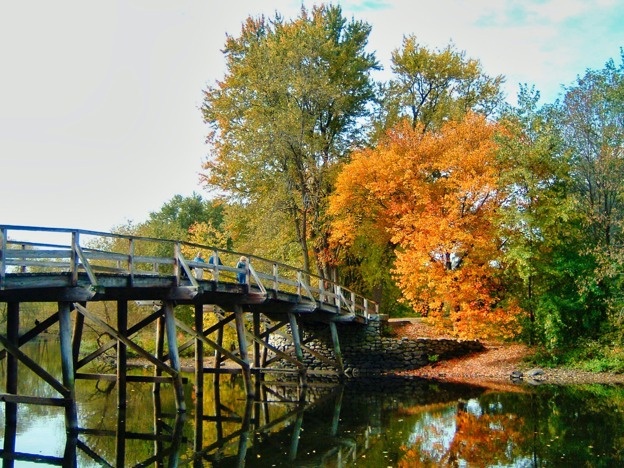
Few towns in the country pack as much American literature into so few square miles as Concord, Massachusetts. This is the town that gave the world Louisa May Alcott, Ralph Waldo Emerson, Nathaniel Hawthorne, and Henry David Thoreau, all living and writing within walking distance of each other in the 1800s. For readers who grew up on classic literature, Concord is close to hallowed ground.
Quick facts:
Location: Concord, Massachusetts (about 20 miles northwest of Boston)
Best for: Fans of Little Women, transcendentalist writers, American history buffs
Nearby RV camping: Spacious Skies Minute Man Campground, Littleton, MA (about 15 minutes away)
Tour Orchard House, Where Alcott Wrote Little Women
Orchard House is where Louisa May Alcott wrote and set the beloved 1868 classic Little Women, and it remains one of the best-preserved historic homes in the country. Nearly 80 percent of the furnishings inside are original to the Alcott family, and there are no ropes or glass barriers between visitors and the rooms, so the experience feels less like a museum and more like stepping directly into the novel. Guided tours run about 90 minutes, and the house is open most days from 10 am to 5 pm, with Monday hours starting at noon. Weekday afternoons tend to be less crowded than weekends, which is worth keeping in mind if you're building flexibility into your route.
A few things to know before you go:
-
Book tickets online in advance, especially during fall foliage season or summer weekends
-
The grounds and gardens are free to walk even without a house tour
-
The on-site museum store carries Alcott-themed books and gifts if you want a souvenir for the road
Retrace the Real-Life Little Women Family at Sleepy Hollow Cemetery
A short drive from Orchard House, Sleepy Hollow Cemetery holds one of the most remarkable literary landmarks in the country. Author's Ridge is a scenic corner of the cemetery where the graves of Alcott, Emerson, Thoreau, and Hawthorne all sit close together. Alcott is buried in a family plot alongside her mother and sisters, including Anna Bronson Alcott Pratt, who was the real-life inspiration for Meg in Little Women. Visitors often leave pens and pencils on Thoreau's headstone as a tribute, and Alcott, notably, served as a Union Army nurse during the Civil War, a detail that adds another layer of American history to the visit.
-
Getting there: The cemetery entrance is on Bedford Street; roads inside are narrow and uneven, so drive slowly once you're through the gate
-
Finding Author's Ridge: Follow the stone markers toward the back of the cemetery, or set "Author's Ridge" as your destination in a phone GPS
-
Good to know: The walk up to the ridge involves some incline, so wear comfortable shoes
Where to park your RV: Spacious Skies Minute Man Campground in nearby Littleton sits in a wooded setting close to both Walden Pond and Concord's historic sites, making it a convenient base for a day or two exploring the town before heading to the next stop.
2. Follow the Real Laura Ingalls Wilder Across the Midwest
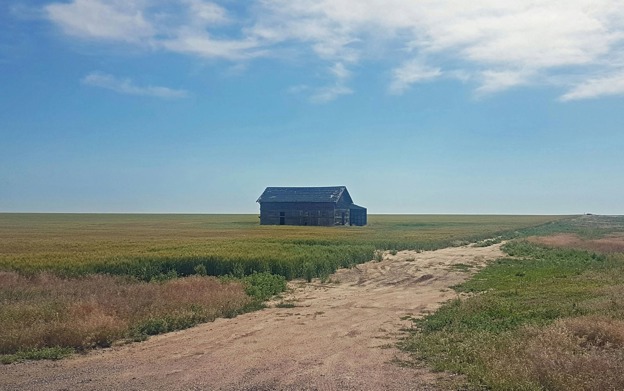
No author lends herself to a road trip quite like Laura Ingalls Wilder. Her Little House books trace a real childhood spent moving across the American frontier, and two of the most significant stops on that journey are still open to visitors today. This is one destination on the list where the RV isn't just a convenient way to get there; it's the way the author herself would have understood the journey.
De Smet, South Dakota: Where Laura Grew Up
De Smet was the setting for five of Wilder's books, including By the Shores of Silver Lake and The Long Winter, and visitors can tour the original Ingalls home that Charles "Pa" Ingalls built between 1887 and 1889, the Surveyors' House featured in the books, and the town's first school, which both Laura and her sister Carrie attended. The De Smet Cemetery, where several Ingalls family members are buried, is another meaningful stop for readers who grew up on the series.
If your visit lines up with summer, the Laura Ingalls Wilder Pageant runs during the middle of each summer, with more than 100 volunteers performing a family-friendly outdoor production on the same land the family once homesteaded.
A true story worth knowing: the Ingalls Homestead itself, the actual land Charles Ingalls claimed, now welcomes RVs. Four RV sites offer water and electric hookups with a choice of 20, 30, or 50 amp connections, each with a campfire ring and picnic table, which means you can genuinely camp on the same prairie the family settled. The sites sit on a hill overlooking the homestead and surrounding farmland, and RV check-in starts at 1pm with checkout at 11am. It's a rare case where the practical camping logistics and the literary landmark are the exact same piece of ground.
Mansfield, Missouri: Where the Little House Books Were Actually Written
Laura and Almanzo Wilder settled at Rocky Ridge Farm in Mansfield in 1894, and it became the longest home she ever had, for 63 years. Two homes are open for touring:
-
The historic farmhouse: built by Laura and Almanzo when they first arrived, preserved largely as it stood in 1957
-
The Rock House: built in 1928 by their daughter, Rose Wilder Lane, as a gift to her parents, and the home where Laura, at 65, wrote the first four Little House books
Wilder's path to publishing is itself a good story for the road. The eight Little House books were published between 1932 and 1943, and Rose helped get her mother's early writing placed in national magazines like McCall's and Country Gentleman before the books existed at all. A ninth book, The First Four Years, was published posthumously in 1971 after the manuscript turned up in Rose's belongings.
Where to park your RV: Laura Ingalls Wilder RV Park sits directly across from the historic Wilder Museum, with full hookups including 30 and 50 amp electric, water, and sewer connections. Staying steps from the museum makes it easy to visit more than once if the first pass through Rocky Ridge Farm leaves you wanting more.
Quick facts:
De Smet, SD: Best for childhood homestead and summer pageant; books connected include By the Shores of Silver Lake, The Long Winter, and Little Town on the Prairie; nearby RV camping at Ingalls Homestead (on-site, 4 sites)
Mansfield, MO: Best for where the books were written; the Little House series was written here, though set elsewhere; nearby RV camping at Laura Ingalls Wilder RV Park (across from museum)
3. The True Story Behind Mark Twain's Hannibal, Missouri
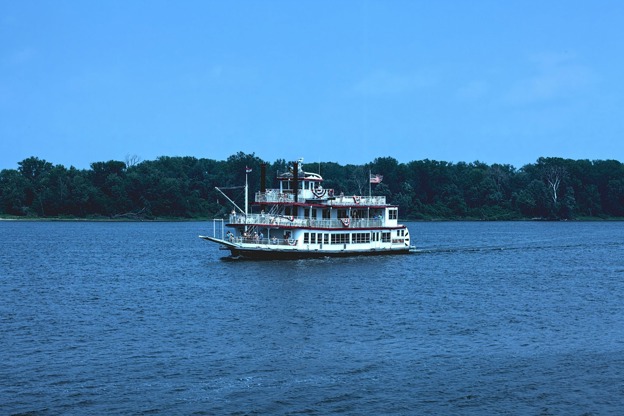
Samuel Clemens grew up to become Mark Twain, and the town where he spent his childhood still looks enough like the setting of his novels that it's easy to see where Tom Sawyer and Huckleberry Finn came from. Clemens lived in what's now the Mark Twain Boyhood Home from 1844 to 1853, and the white picket fence on the property inspired one of the most famous scenes in American literature.
The true story of how Hannibal shaped Twain is told across seven historic properties included with one ticket: the Boyhood Home itself, the Becky Thatcher House, the Huckleberry Finn House, the J.M. Clemens Justice of the Peace Office, Grant's Drug Store, the Museum Gallery, and the Interpretive Center. The Boyhood Home was designated a National Historic Landmark in 1962 and has been open to visitors since 1912.
Quick facts:
Location: Hannibal, Missouri, on the Mississippi River
Hours: 9 am to 5 pm daily, March 15 through October 31; 10 am to 4 pm daily the rest of the year
Best for: Tom Sawyer and Huckleberry Finn fans, American history buffs
Nearby RV camping: Mark Twain Cave & Campground, a few miles south of downtown
A few highlights worth building into your visit:
-
Pose at the fence for the classic "help Tom Sawyer paint the fence" photo op
-
Catch a live performance of "The Inspiration for Tom Sawyer," offered several times a week in season
-
Walk the Mark Twain Historic District downtown before or after the museum tour
Where to park your RV: Mark Twain Cave & Campground sits a couple miles south of Hannibal, shaded by mature trees, with the Mississippi River within walking distance and guided tours of the Mark Twain Caverns available right on site, so you can pair a literary stop with an easy outdoor detour.
4. Sleepy Hollow, New York: Washington Irving's Haunted Hometown
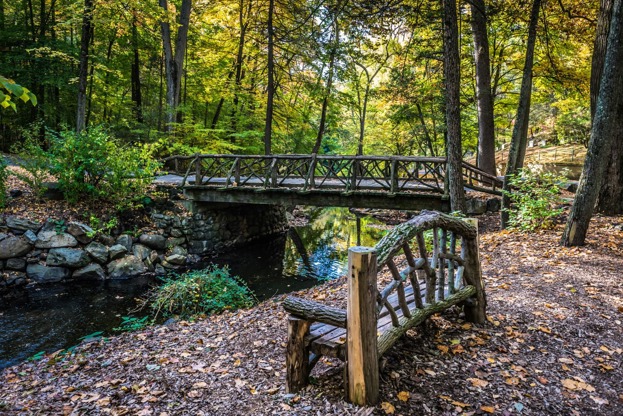
Washington Irving didn't just write "The Legend of Sleepy Hollow," he lived it. Irving returned to Tarrytown in the 1830s and purchased a neglected farm cottage on the riverfront, which he named Sunnyside and spent the next 20 years renovating into "a little paradise." He lived there for the last 25 years of his life, and the study, dining room, parlor, kitchen, and most bedrooms remain open to the public, filled largely with his original furnishings, including the desk where he worked.
Irving wasn't inventing from nothing, either: he based Ichabod Crane on a real soldier he'd met named Ichabod Crane during the War of 1812, and he set the story in the actual town where he lived, right down to real local landmarks. Irving died at Sunnyside in 1859 and is buried at Sleepy Hollow Cemetery, which overlooks the Old Dutch Church Burial Ground, the same ground where the headless Hessian soldier of his story is said to rest.
A few stops for a self-guided day in town:
-
Tour Sunnyside itself, open by timed tour from May through November
-
Visit the Washington Irving Memorial at Broadway and West Sunnyside Lane
-
Walk through Sleepy Hollow Cemetery and the Old Dutch Church Burial Ground
-
If you're visiting in autumn, the Old Dutch Church and cemetery are especially worth timing around fall foliage
A practical note before you route this one: Sleepy Hollow is one stop on this list where the RV itself needs a workaround. This part of Westchester County is genuinely not RV-friendly: the major parkways are restricted to passenger cars, and getting a larger rig stuck under a low-clearance bridge is a real risk, so local roads and historic-site parking aren't built with big rigs in mind. The better approach is to camp outside the immediate area and drive in with a tow vehicle or day-trip by local transit.
Where to park your RV: Croton Point Park, a Hudson River peninsula just a few miles up the road, is the closest option with on-site RV and tent camping, and it makes a scenic, workable base for the day.
5. Take a Self-Guided Literary Tour Through Steinbeck's California
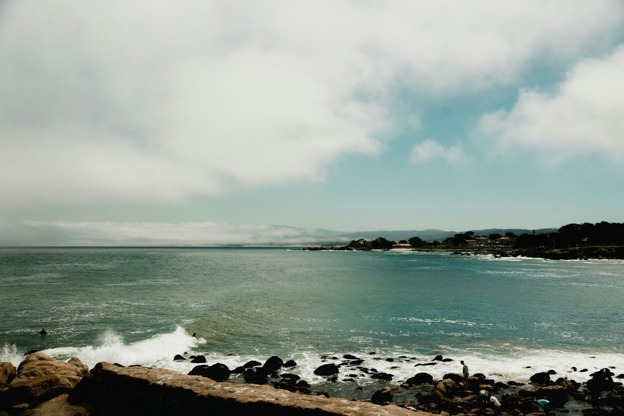
John Steinbeck wrote about the Salinas Valley and the Monterey coast so vividly that the region is often called Steinbeck Country, and it's one of the rare literary destinations where the actual settings of the novels, not just the author's home, are still recognizable today. This American West stop is fitting for RV travelers specifically: Steinbeck himself crossed 34 states in a truck camper he called Rocinante while researching his travel memoir, Travels with Charley, which makes a road trip through his home turf feel especially on brand.
Start in Salinas
The National Steinbeck Center sits in Salinas, the town where Steinbeck grew up, and holds the largest collection of Steinbeck archives in the United States. Seven themed exhibit areas cover East of Eden, Cannery Row, Of Mice and Men, The Grapes of Wrath, and more, and the Center displays the actual green camper Steinbeck drove for Travels with Charley. It's open daily from 10 am to 5 pm. Plan on at least two hours for a self-guided visit, and don't skip lunch nearby: Steinbeck's childhood home, just down the street, is now a restaurant open for lunch.
Drive 17 Miles to Cannery Row in Monterey
A scenic 17-mile drive from Salinas leads into the heart of Monterey, where the real Ocean View Boulevard, once lined with sardine canneries, was officially renamed Cannery Row in 1958 in honor of Steinbeck's 1945 novel. Real buildings from the book are still standing:
-
A red building still bears the sign "Wing Chong's Market," the basis for Lee Chong's grocery in the novel
-
Pacific Biological Laboratories at 800 Cannery Row was the actual workplace of Steinbeck's friend Ed Ricketts, who inspired the character of Doc
-
Steinbeck Plaza holds a bust of the author with a plaque quoting the opening paragraph of Cannery Row
Quick facts:
Start point: National Steinbeck Center, Salinas, CA
End point: Cannery Row, Monterey, CA (about 17 miles away)
Best for: Fans of Cannery Row, East of Eden, Of Mice and Men, and American road trip literature
Nobel Prize note: Steinbeck is one of the National Steinbeck Center's central figures as a Nobel Prize–winning author
Where to park your RV: Marina Dunes RV Resort sits a few miles north of Monterey behind the dunes near Marina State Beach, putting you within easy reach of both Cannery Row and Salinas without navigating an RV through the narrower streets of downtown Monterey.
6. Prince Edward Island: Canada's Capital of Literary Tourism
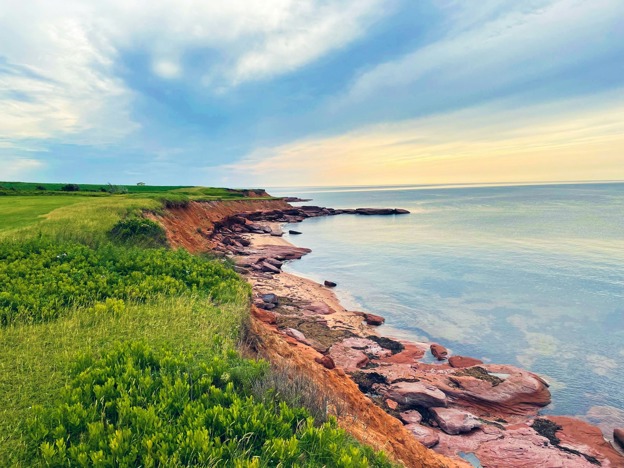
Cross the border into Canada and you'll find one of the most complete literary landscapes on this list. Prince Edward Island is where Lucy Maud Montgomery grew up, and it's the real setting behind Anne of Green Gables, one of the most beloved pieces of classic literature ever written for young readers.
Green Gables Heritage Place is a farm in Cavendish that belonged to Montgomery's cousins, David and Margaret MacNeill, and served as her direct inspiration for the Cuthbert farm in the novel. The story follows a spirited orphan named Anne Shirley coming to live at Green Gables, and it's based in part on Montgomery's own experiences growing up on the island. The house has been carefully furnished to match the descriptions in the book, reflecting the late Victorian era, and it's part of L.M. Montgomery's Cavendish National Historic Site, open 9am to 5pm daily.
Beyond the house itself, the surrounding trails follow scenes straight out of the novel:
-
Lovers Lane: a wooded walking path featured in the books, just steps from the house
-
The Haunted Wood: the atmospheric trail Anne herself was famously afraid of
-
Balsam Hollow Trail: an easy walk of less than a kilometer, following a brook through the woodlands
Costumed interpreters bring the story to life on site, and the on-site Butter Churn Café serves coffee, baked goods, and local ice cream if you need a break between trails.
A true story worth knowing: the farmhouse itself isn't fiction. In 1937, the farm was incorporated into Prince Edward Island National Park, which means the literary landmark and the national park are one and the same, a rare setup that makes camping nearby especially convenient.
Quick facts:
Location: Cavendish, Prince Edward Island, Canada
Hours: 9 am to 5 pm daily (seasonal, typically May through September)
Best for: Classic literature fans, families, readers who grew up on Anne of Green Gables
Nearby RV camping: Cavendish Campground, inside PEI National Park
Where to park your RV: Cavendish Campground sits inside Prince Edward Island National Park itself, with over 200 sites and full 3-way hookups (electricity, water, and sewer) at select sites, plus 20, 30, and 50 amp service depending on the site. It's close to the village of Cavendish and Green Gables Heritage Place, which means you can genuinely park within walking distance of the setting of the novel. Reservations open each year in February, and this is one of the most popular campgrounds on the island, so book well ahead for summer travel.
7. Emily Dickinson's Amherst and New England's Literary Heartland
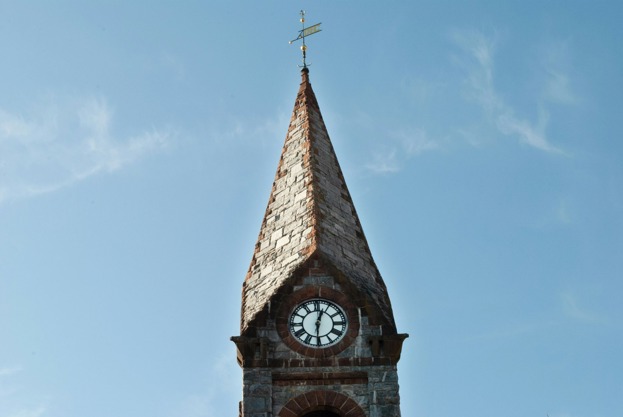
Western Massachusetts holds two of American literature's most important homes within about an hour's drive of each other, making it a natural pairing for a New England literary stop.
Amherst: Where Emily Dickinson Wrote in Near Total Seclusion
The Emily Dickinson Museum comprises two houses in the center of Amherst: The Homestead, a National Historic Landmark where Dickinson was born and wrote nearly all of her poetry, and The Evergreens, where her family's heirs lived until 1988. Dickinson lived at the Homestead from 1855 to 1886, and famously wrote 1,775 poems, only seven of which were published during her lifetime.
Visitors explore the Homestead, where Dickinson was born, died, and did most of her writing, alongside The Evergreens, home to the poet's brother, sister-in-law, and their three children. The museum is open March through December, with tickets covering both houses on a timed-entry basis. Guided tours typically run about an hour.
Lenox: Where Edith Wharton Wrote Ethan Frome
About an hour southwest, in the Berkshires, sits The Mount, the estate Edith Wharton designed and built herself. Wharton took possession of the property in 1902 and, though she lived there only about ten years, wrote her breakthrough novel The House of Mirth and the haunting classic Ethan Frome while in residence. Wharton was the first woman to win the Pulitzer Prize for Fiction, and The Mount was declared a National Historic Landmark in 1971.
Visitors can tour the house and gardens and are invited to sit in and interact with the rooms without obstruction; Wharton designed the gardens themselves as architectural compositions, divided into rooms, in concert with the house and surrounding landscape. The Mount is open from mid-May through the end of October, so this stop works best as a warm-weather addition to your route.
Quick facts:
Amherst (Dickinson): best known for poetry and near-total seclusion; open March through December; a National Historic Landmark
Lenox (Wharton): best known for Ethan Frome and The House of Mirth; open mid-May through October; a National Historic Landmark, and Wharton was the first woman to win the Pulitzer Prize for Fiction
Where to park your RV: October Mountain State Forest sits about 10 miles from Lenox and is Massachusetts' largest state forest, offering camping sites alongside hiking trails and fishing spots, making it a workable base for exploring both The Mount and the wider Berkshires before continuing your route.
8. Key West, Florida: Chasing Hemingway's Endless Summer

Ernest Hemingway is one of the most recognizable names in American literature, and the house where he lived his most productive years is still standing, cats and all. The 1851 French Colonial limestone home at 907 Whitehead Street was Hemingway's primary residence from 1931 to 1939, widely considered the most prolific period of his career, and it remains substantially as he left it, right down to his original furniture and the second-floor writing studio where his Royal typewriter still sits.
Hemingway wrote eight major works during his time in this house before departing for Cuba with Martha Gellhorn in 1939. The pool out back was cut through solid coral in 1937 and 1938, costing roughly $20,000 at the time, the equivalent of about $400,000 today, and legend has it Hemingway pressed a penny into the wet cement, saying it was his last one after the extravagant expense.
Then there are the cats. Roughly 60 polydactyl, or six-toed, cats roam the walled property, all descended from Snow White, the original cat given to Hemingway by a sea captain. About half carry the extra-toe trait today, and every cat on the property is named after a famous person.
Quick facts:
Location: 907 Whitehead Street, Key West, FL
Hours: 9 am to 5 pm daily, year-round
Tours: 20 to 30 minutes, departing roughly every 15 minutes, no reservation required
Best for: Hemingway fans, cat lovers, anyone chasing classic American literature
A practical note for RV travelers: Key West is a small island with narrow, congested streets downtown, so this is one stop where you'll want to park your rig outside the historic district and get around on foot or by local transit once you arrive.
Where to park your RV: Boyd's Key West Campground sits on the Gulf of Mexico with shady, grassy sites and waterfront options for RVs, and is set up to accommodate big rigs while still keeping you within reach of Whitehead Street and the rest of Old Town.
9. Oxford, Mississippi: William Faulkner's Yoknapatawpha County
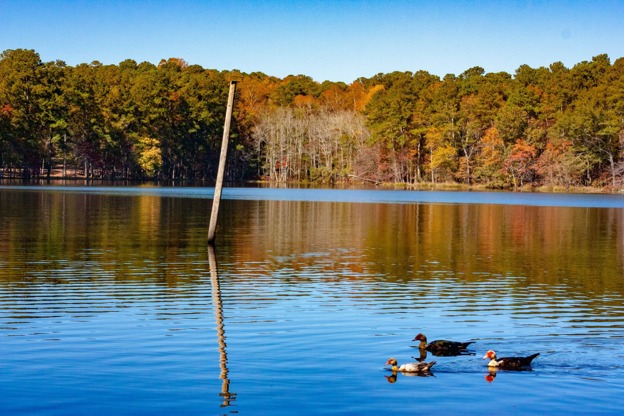
William Faulkner invented an entire fictional county, Yoknapatawpha, based almost entirely on the real Oxford, Mississippi, where he lived most of his adult life. Faulkner purchased Rowan Oak, a primitive Greek Revival house built in 1844, when it was in disrepair in 1930, and resided there until his death in 1962.
Rowan Oak is the historic home of Nobel Prize-winning author William Faulkner, and the home is preserved as it was at the time of his death, with 90 percent of the original furnishings still in place. Faulkner personally renovated the house over the years, installing plumbing and electricity, adding brick terraces, a porch, and a fourth bedroom. His writing desk remains just as he left it, and visitors often describe the whole property as feeling like a time capsule.
Quick facts:
Location: Old Taylor Road, Oxford, Mississippi
Hours: Tuesday through Saturday 10 am to 4 pm, Sunday 1 pm to 4 pm, closed Mondays
Admission: $10 for adults, cash only; free for children 12 and under
Best for: Fans of American literature, Southern Gothic fiction, Nobel Prize–winning authors
A few things worth knowing before your visit:
-
A self-guided tour lets you see nearly every part of Faulkner's daily life inside the home
-
The grounds are pet-friendly, so leashed dogs are welcome outside
-
Several easy walking trails wind through the wooded acres surrounding the house, shaded and pleasant even on a hot day
Where to park your RV: Roundabout Oxford RV & Water Resort sits just outside Oxford, offering RVers a spacious, full-hookup base within easy driving distance of Rowan Oak and the rest of the historic downtown.
10. Asheville, North Carolina: Thomas Wolfe's Mountain Hometown
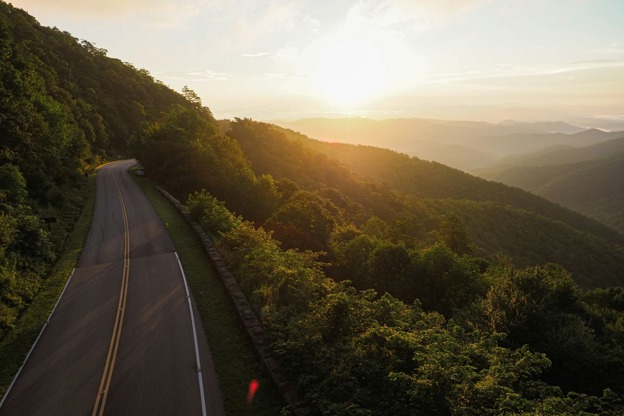
Thomas Wolfe grew up in his mother's Asheville boardinghouse and later turned it into the setting for one of the most enduring works of American literature. The house, originally named "Old Kentucky Home" by a previous owner, was purchased by Wolfe's mother in 1906, and Wolfe immortalized the rambling Victorian structure as "Dixieland" in his epic autobiographical novel, Look Homeward, Angel.
Look Homeward, Angel has never gone out of print since its 1929 publication, and the true story behind it is more dramatic than most literary landmarks get. Many Asheville residents believed the novel portrayed the city and its people unfavorably, and Wolfe's books were banned from Asheville's public libraries as a result; he reportedly didn't feel safe returning home for several years after publication.
The home has been restored to its 1916 condition, reflecting the years of Wolfe's childhood, and the sprawling house had grown to 29 rooms by the time Wolfe lived there, a detail that becomes vivid once you're standing inside it.
Quick facts:
Location: 52 N. Market Street, Asheville, NC
Hours: Tuesday through Saturday, 9 am to 5 pm; closed Sunday and Monday
Admission: $5 for adults, $1 for youth ages 3 to 17, free for children 2 and under
Best for: Fans of American literature, Southern fiction, readers who enjoy a home with a real controversy attached
A few things to know before your visit:
-
Allow about 1.5 hours for a full visit, including a short film at the visitor center before your guided tour
-
The visitor center includes a bookstore and gift shop, and hosts occasional literary readings and events
-
Downtown Asheville is walkable from the memorial, so this stop pairs easily with a broader afternoon in the city
Where to park your RV: Wilson's Riverfront RV Park bills itself as the closest RV park to downtown Asheville, with sites along the French Broad River, full hookups including power, water, and sewage, and a local bike path running right through the campground, making it an easy final stop to close out your literary road trip.
Your New Chapter: Turn Your Reading List Into a Road Trip
Every destination on this list shares something the flight-and-hotel version of literary travel can't offer: the freedom to link them together. You don't have to choose between Louisa May Alcott's Concord and Laura Ingalls Wilder's prairie, or between Hemingway's Key West and Faulkner's Oxford. With an RV, the whole map is open, and the road between stops becomes part of the story instead of a logistics problem to solve.
A few ways to think about building your own route:
-
Pick a region and go deep: New England alone covers Concord, Amherst, and Lenox within a few hours of driving
-
Follow one author's full arc: the Laura Ingalls Wilder trail from De Smet to Mansfield retraces an entire childhood
-
Mix eras and genres: pair a 19th-century poet's home with a 20th-century Nobel laureate's on the same trip
Whichever route you choose, an RV rental means you're not locked into a single city's calendar of hotel check-ins and flight times. You can stay an extra day at a museum that hooks you, detour to a campground on a whim, or simply read in peace on a long stretch of highway between stops.
Ready to start your new chapter? Book a Cruise America RV rental and turn your bookshelf into an actual itinerary, one literary landmark at a time.