The Best Lighthouse Road Trip Routes in New England
- RV Destinations
- Road Trip
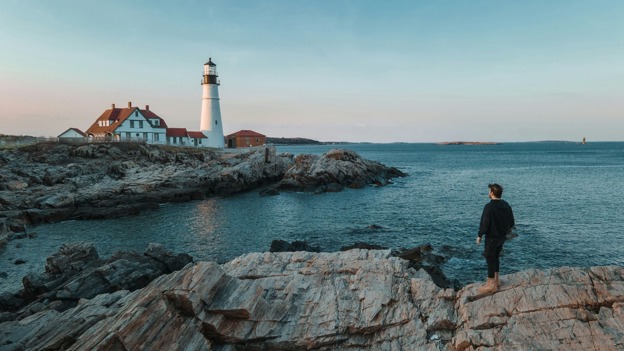
Few coastlines in the country reward a slow drive the way New England does. Between rocky headlands, tucked-away harbors, and charming towns that barely change from one decade to the next, this stretch of Atlantic coast is dotted with some of the most photographed lighthouses in America. Figuring out the best lighthouse road trip routes in New England means stringing together a handful of regions, mostly along the Maine coast, with a couple of worthwhile detours into New Hampshire and further south if time allows.
This guide maps out a route that starts in southern Maine, works north through Cape Elizabeth and Midcoast Maine, and finishes near Mount Desert Island and Acadia National Park, with an optional extension toward Rhode Island for anyone with extra days to spare. Along the way, we'll cover driving distances, the best times to visit each stop, and where to park an RV for the night so the whole trip feels like a road trip rather than a checklist.
Planning Your New England Lighthouse Road Trip
Before mapping out stops, it helps to think of this road trip as three connected legs rather than one long drive. Trying to see everything in a single weekend usually means less time at each lighthouse and more time behind the wheel.
|
Leg |
Region |
Approx. Driving Time |
|
Leg 1 |
Southern Maine (Kittery to Portland) |
45 minutes to 1 hour |
|
Leg 2 |
Midcoast Maine (Portland to Rockland) |
1.5 to 2 hours |
|
Leg 3 |
Downeast Maine (Bar Harbor to West Quoddy Head) |
2 to 3 hours |
A few planning notes worth keeping in mind:
-
Budget five to seven days if you want to comfortably cover the full route from southern Maine to Downeast
-
Three to four days works well if you're focusing only on the Portland-to-Midcoast stretch
-
Route 1 is the fastest option between towns, but the smaller coastal roads add scenic value if you have the time
Cape Elizabeth: Maine's Most Concentrated Lighthouse Cluster
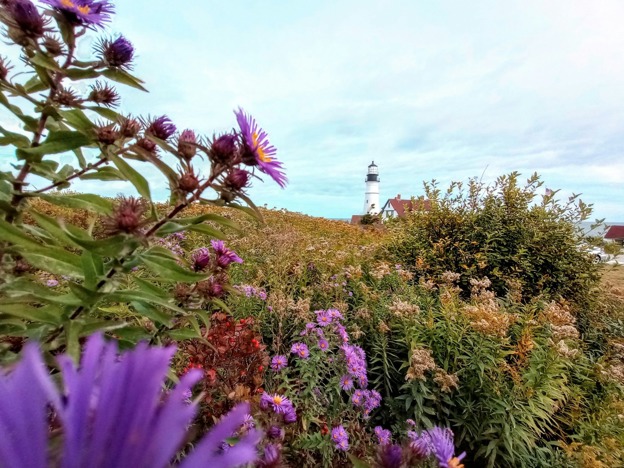
Just south of downtown Portland, Cape Elizabeth packs three lighthouses into a few square miles, making it one of the easiest and most rewarding stops on the entire route. This is where most travelers begin their Maine lighthouse road trip, and for good reason: nowhere else on the coast can you see this many lighthouses with so little driving between them.
The area also makes a natural home base for a night or two, with South Portland just a few minutes away for food, groceries, and RV-friendly amenities before heading further up the coast.
Portland Head Lighthouse: The Icon of the Trail
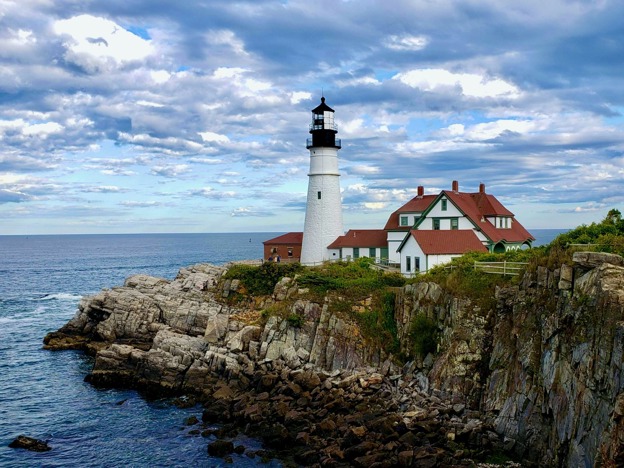
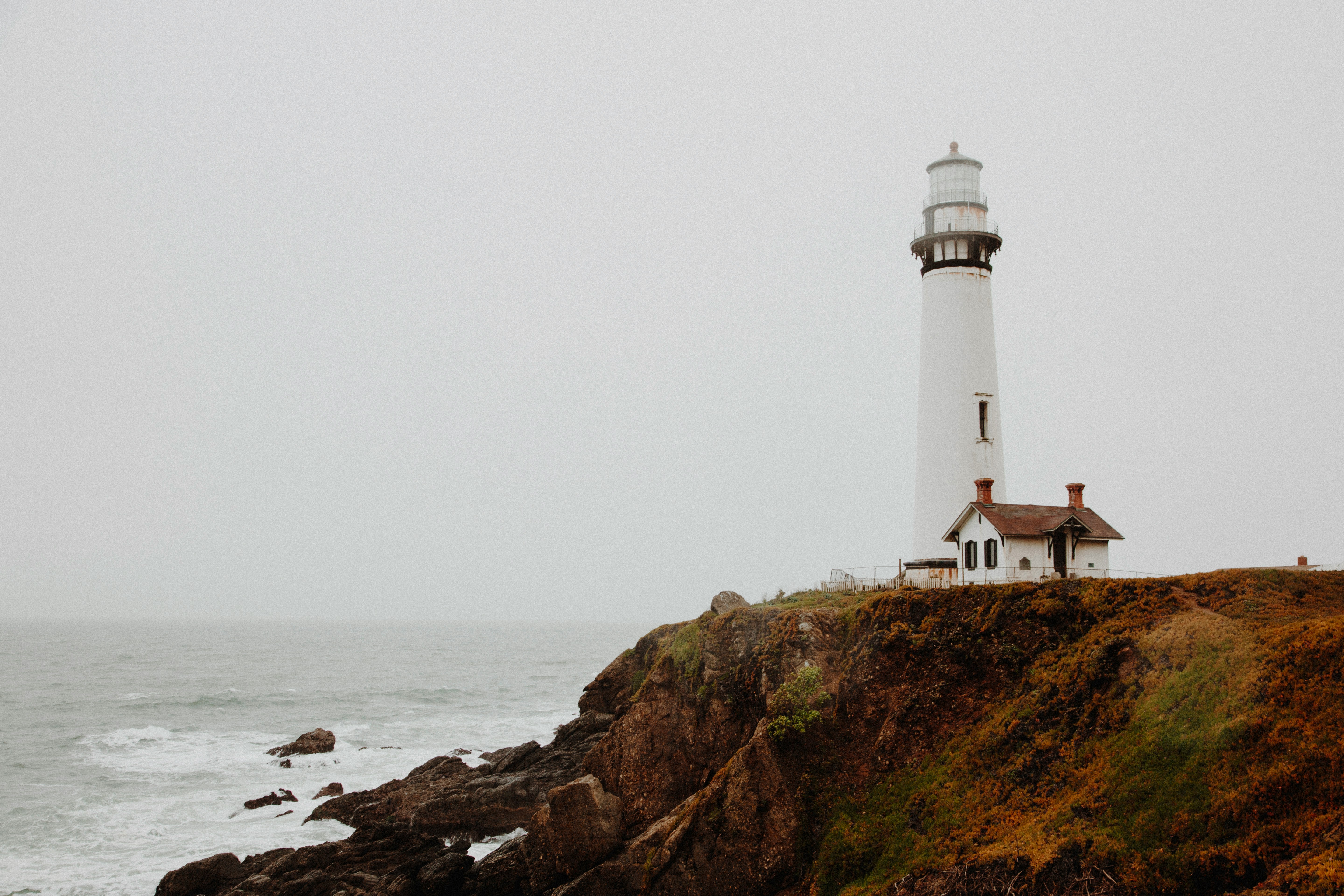
No Maine lighthouse road trip is complete without a stop at Portland Head Lighthouse, the single most photographed structure on this entire route and arguably in the state. Commissioned by George Washington and completed in 1791, Portland Head Light is also one of the oldest lighthouses in the country, and its dramatic setting against rocky cliffs and crashing surf explains why it shows up on so many postcards, calendars, and Instagram feeds.
The lighthouse sits inside Fort Williams Park, an easy 15-minute drive from downtown Portland. Walking paths wind along the coastline here, offering several different angles of the tower and the rocky beach below, so it's worth spending an hour or more rather than snapping one photo and moving on.
A few practical notes:
-
Parking requires a small hourly fee in season, paid at self-service kiosks
-
The tower itself is only open to the public once a year, on Maine Open Lighthouse Day in September, though the grounds are open year-round
-
Early morning or late afternoon light gives the best photos, especially in fall
Spring Point Ledge Lighthouse and Bug Light: A Portland Harbor Detour
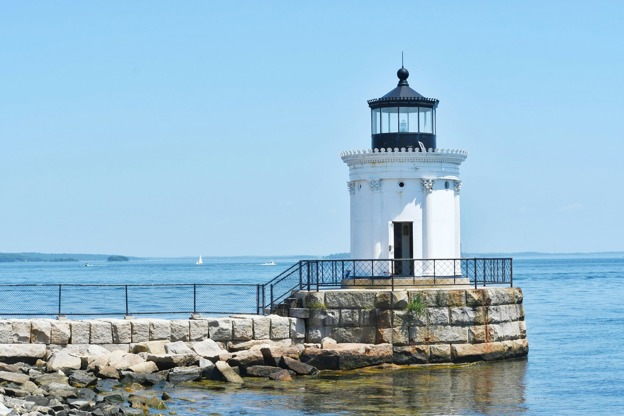
A short drive from Fort Williams Park, Spring Point Ledge Lighthouse sits at the entrance to Portland Harbor near the campus of Southern Maine Community College. Built in 1897, this Spring Point Ledge Light is unusual for the region since it sits at the end of a stone breakwater rather than on a rocky point, giving it a distinctly different look from most other stops on this route.
The walk out to the lighthouse is short and flat, making it one of the easier stops to add without much extra time. On a clear day, the Portland skyline sits in the background across the water, which makes for one of the better photo backdrops on the entire trip.
A few minutes away, a second, smaller Bug Light lighthouse is worth pairing with the same stop:
-
Built in 1855 and standing just 25 feet tall, it's one of the more modest structures on the route
-
Located in Bug Light Park, which also has some of the best skyline views of Portland
-
An easy add-on since it sits only a short drive from Spring Point Ledge
Together, these two stops make for a relaxed hour or two before continuing north toward Midcoast Maine.
Goat Island Lighthouse: A Quiet Stop in Cape Porpoise
About 30 minutes south of Portland, tucked into the small fishing village of Cape Porpoise near Kennebunkport, Goat Island Lighthouse offers a quieter alternative to the busier stops further north. Built in 1859 to mark the entrance to Cape Porpoise Harbor, this famous lighthouse stands just 25 feet tall but sits on its own small island, giving it a distinct, secluded feel even though it's visible right from the mainland.
The lighthouse is best viewed from the pier in the village itself, where local fishing boats come and go throughout the day. Since Cape Porpoise sees far fewer visitors than Portland Head or Nubble Lighthouse, this stop works well for travelers who want a slower, less crowded moment along the coast.
A few reasons to build in the detour:
-
Kennebunkport's downtown is just minutes away, with plenty of shops and a good spot for a lobster roll
-
The pier view requires no hiking or climbing, making it an easy stop for any group
-
Quieter than the Cape Elizabeth cluster, especially outside peak summer months
Pemaquid Point Lighthouse: Midcoast Maine's Scenic Standout
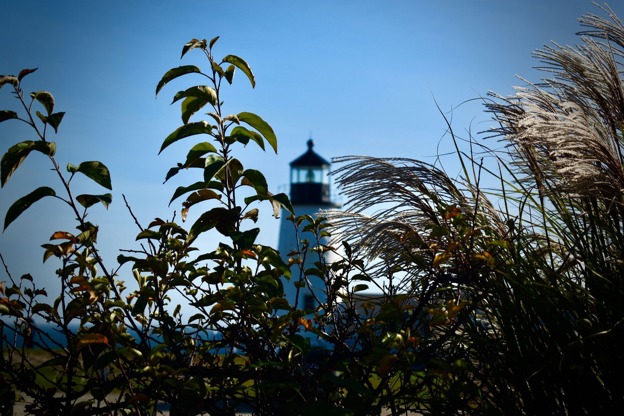
As the route continues north into Midcoast Maine, Pemaquid Point Lighthouse is worth the detour off Route 1. Built in 1827, this point lighthouse sits atop dramatic, layered sea cliffs that visitors can climb out onto for some of the best coastal views on the entire trip. It's a favorite among photographers for good reason: few other stops let you get this close to the water while still standing on solid rock.
The grounds include a small museum and art gallery covering the history of the lighthouse keeper who once lived and worked on site, along with picnic tables shaded by nearby trees. It's an easy place to spend an hour wandering the rocks and taking in the scenery before continuing on.
A few things to know before visiting:
-
There's a small entrance fee per person, payable in cash only
-
The rocks can be uneven and slippery, especially near the water, so sturdy footwear is worth packing
-
Nearby, Marshall Point Lighthouse in Port Clyde and Owls Head Lighthouse near Rockland make worthwhile additions if you have an extra half day in the area
Rockland Harbor itself is a good overnight stop before continuing toward Acadia National Park and Bar Harbor.
Bass Harbor Lighthouse: Acadia's Sunset Icon
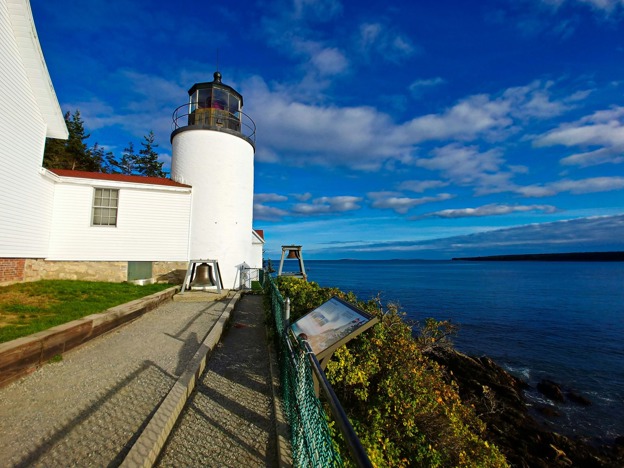
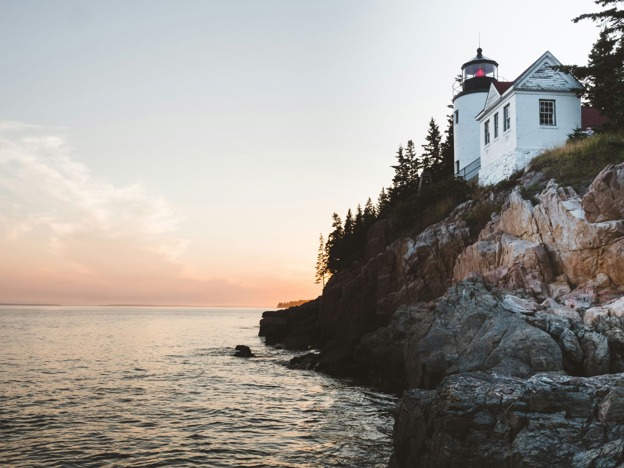
Tucked inside Acadia National Park on the southwest side of Mount Desert Island, Bass Harbor Lighthouse is one of the most rewarding stops on this entire route, especially for sunset. Built in 1858, Bass Harbor Head Light sits on a rocky point overlooking Penobscot Bay, and the combination of the tower, the surrounding pines, and the crashing surf below makes it one of the more dramatic settings on the whole trip.
A few things to know before visiting:
-
Parking is limited and fills up quickly in summer, especially on weekends. Once the lot is full, rangers generally don't allow cars to turn around and leave, so arriving early is worth it
-
Getting the best view of the lighthouse itself means climbing down a set of stairs and, if you're comfortable, out onto the coastal rocks. Sturdy footwear is a must here
-
The grounds are open year-round, though winter visits call for extra caution on the rocks
Late May through mid-June, or mid-September into October, tend to offer the best mix of good weather and thinner crowds if photography is the priority.
Bar Harbor: Your Basecamp for Acadia and Beyond
Bar Harbor makes the natural basecamp for this stretch of the trip, sitting close enough to Bass Harbor and Acadia's other highlights to serve as a home base for two or three nights. The downtown area is walkable and full of seafood shacks, ice cream shops, and a handful of stores worth browsing after a day of lighthouse hopping.
Beyond its convenient location, Bar Harbor also works as the jumping-off point for the long detour to West Quoddy Head, since the drive from here is considerably shorter than starting from further south on the coast. A few reasons to build in extra time here:
-
Acadia National Park's carriage roads and Cadillac Mountain are both easy add-ons if you want a break from lighthouse hopping
-
Several outfitters run a boat tour around the harbor, which offers a different vantage point of the coastline and occasional wildlife sightings
-
Restaurants and grocery stores make it easy to restock before continuing further Downeast, where options become more limited
West Quoddy Head: The Easternmost Point of the Continental U.S.
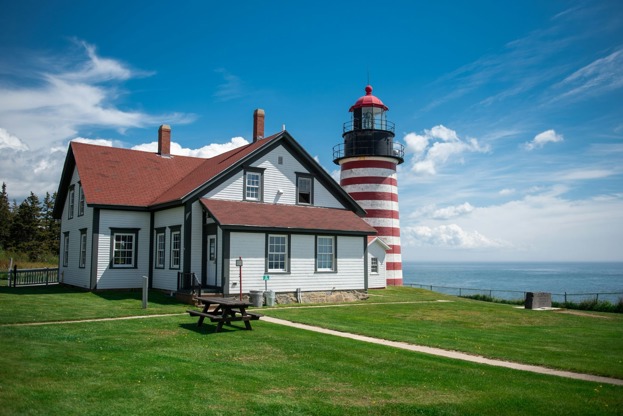
For travelers willing to go the distance, West Quoddy Head Lighthouse is one of the most rewarding detours on this entire route. Located in Lubec, Maine, it marks the most eastern point of the continental United States, and its candy-cane red and white stripes make it one of the more instantly recognizable head lighthouses in New England.
The drive here takes commitment. It's over two hours from Bar Harbor, well beyond where most travelers venture when visiting Maine, but the payoff is worth it for anyone chasing a complete lighthouse road trip. West Quoddy Head Light sits inside a state park with walking trails that hug the coastline, and Lubec itself offers some of the most underrated hiking and coastal scenery in the state.
A few reasons to make the trip:
-
The lighthouse grounds include several miles of coastal trails with dramatic ocean views
-
Whale watching is possible from the shoreline during the right season
-
Since so few visitors make it this far, the area feels far less crowded than anywhere else on the route
If Downeast Maine fits your schedule, this stop is the natural finale before turning back or continuing the trip elsewhere.
Extending the Trip: Massachusetts and Rhode Island Add-Ons
For travelers with extra days, or those approaching from the south instead of starting in Maine, Massachusetts and Rhode Island offer a worthwhile southern extension to this route. Cape Cod alone is home to several notable stops, while Newport, Rhode Island rounds out the trip with some of the most scenic harbor views in New England.
A few highlights worth building into a southern leg:
-
Castle Hill Lighthouse in Newport, perched at the end of historic Ocean Drive with sweeping views of Narragansett Bay
-
Rose Island Lighthouse, also in Newport, accessible by boat ride and known for its overnight stay program for those wanting a truly unique night on the water
-
Newport's harbor views of the Newport Bridge, best seen from either of the lighthouses above or from a boat tour around the bay
This extension adds two to three days to the overall trip, but it pairs naturally with the Maine route for travelers who want to experience lighthouses across the full stretch of the New England coast rather than just the northern half.
Best Time to Go: Seasonal Timing for Lighthouse Photography
Timing this trip well makes a real difference, both for weather and for the quality of light at each stop. Fall and summer tend to offer the best combination of good weather and long daylight hours, giving you more flexibility to hit multiple lighthouses in a single day.
A quick breakdown by season:
|
Season |
Pros |
Considerations |
|
Summer (June to August) |
Longest daylight hours, warmest weather |
Parking lots fill up fast at popular stops, especially on weekends |
|
Fall (September to mid-October) |
Crisp light, fewer crowds, foliage backdrop |
Some seasonal shops and gift shops start closing by late October |
|
Late Spring (May to mid-June) |
Mild weather, thinner crowds than summer |
Water can still be cold for anyone hoping to explore tide pools or beaches |
|
Winter |
Dramatic, moody photos with fewer visitors |
Rocky areas near the water can be icy, and some roads may be harder to access |
A few additional tips:
-
Early morning and late afternoon light tend to photograph best at nearly every stop on this route
-
Weekdays see noticeably lighter crowds than weekends, especially in July and August
-
If seeing the interior of a tower matters to you, check individual lighthouse websites, since many only open for tours a handful of days each year
RV Camping Along the Coastal Route
Choosing where to camp shapes the whole rhythm of this trip, and Maine's coast has enough options to keep an RV parked within a short drive of nearly every stop on this route.
|
Region |
Campground |
What Sets It Apart |
|
Cape Elizabeth / South Portland |
Wild Duck Adult Campground & RV Park |
Full hookups on the southern Maine coastline, close to Fort Williams Park |
|
Cape Elizabeth / South Portland |
Bayley's Camping Resort |
Family-friendly, within 10 miles of the shoreline, free beach shuttle |
|
Midcoast Maine |
Searsport Shores Ocean Campground |
Oceanfront sites on Penobscot Bay, roughly between Camden and Bar Harbor |
|
Bar Harbor / Acadia |
Bar Harbor Campground |
Closest private campground to downtown Bar Harbor and Acadia's entrance |
|
Bar Harbor / Acadia |
Blackwoods Campground |
Inside Acadia National Park itself, on Mount Desert Island's east side |
|
Bar Harbor / Acadia |
Timberland Acres RV Park |
About 14 miles out, good option if closer sites are booked |
A few things worth planning around:
-
Book early for summer: Acadia-area campgrounds fill up months ahead for July and August dates
-
Check rig size limits: Some of the smaller, more scenic sites near the water have tighter turns than a large motorhome can manage
-
Consider shoulder season: June and September offer better availability and thinner crowds than peak summer
Book Your Cruise America RV for Maine's Best Lighthouse Road Trip
Ready to see it for yourself? New England's best lighthouse road trip is built for exactly this kind of travel: long coastal drives, small towns worth lingering in, and stops that reward a slower pace rather than a packed schedule. Cruise America makes it easy to turn this route into a flexible, self-guided adventure. Choose your RV, map out your stops from Cape Elizabeth to Bar Harbor, and book your campgrounds along the way.
Book your RV today and get ready to see some of the country's most iconic lighthouses up close.