The Top-Rated Western Canada Road Trip
- Road Trip
- Location
Western Canada is one of the most rewarding regions in the country to explore by road. Within a single trip, you can move from the salty air of the west coast to the turquoise lakes and towering peaks of the Canadian Rockies, then loop back through glacier country before returning to the city. It's a route that rewards travelers who love nature, wide open spaces, and a new view every hour.
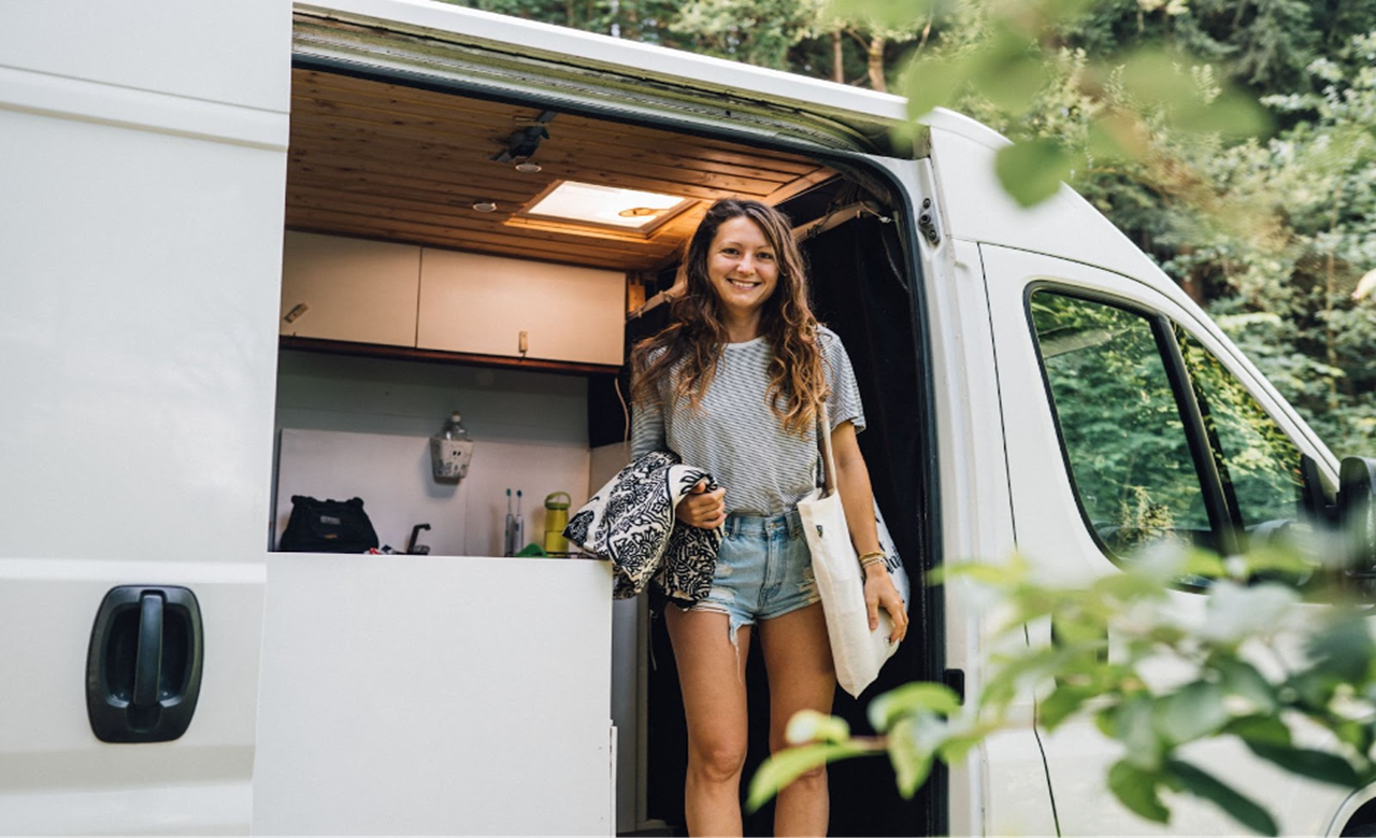
While plenty of travelers tackle this trip by rental car, an RV offers a different kind of freedom. You bring your accommodation with you, wake up steps from a trailhead, and spend more time exploring and less time checking in and out of hotels. Here's a top-rated Western Canada road trip that hits the best stops in British Columbia and Alberta, along with tips for pacing, timing, and making the most of your time on the road.
Planning Your Western Canada Road Trip
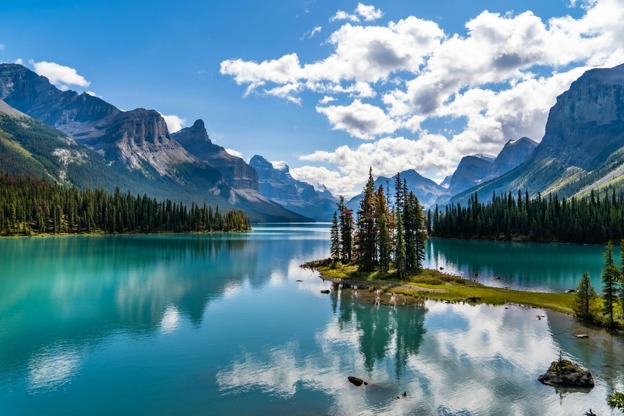
Before you go, it helps to have a clear picture of what this road trip actually covers. Western Canada generally refers to British Columbia and Alberta, though Manitoba and Saskatchewan are sometimes included too. For this itinerary, we're focused on the mountain and coastal corridor that most travelers picture when they imagine a Canadian road trip: Vancouver, the Canadian Rockies, and the national parks in between.
The most popular version of this route runs from Vancouver to Jasper (or the reverse), looping through Banff, Yoho, and Glacier National Park along the way. It can be done in as little as a week if you're focused purely on the highlights, but two weeks gives you enough breathing room to actually enjoy each stop rather than rushing through it.
A few planning basics to consider:
-
Best time to go: Summer months, roughly mid-June through mid-October, offer the most reliable weather and full access to hiking trails and mountain passes. Peak season runs from mid-July through August, so traveling in June or September means fewer crowds.
-
Car rental vs. RV: A rental car might be slightly cheaper upfront, but an RV combines transportation and accommodation into one cost, which can even out over a longer trip.
-
Route direction: Starting in Vancouver means tackling mountain driving after you've settled in behind the wheel, while starting in Calgary or Jasper front-loads the Rockies first.
Whichever direction you choose, this is one Canadian road trip that rewards slowing down.
Starting Your Road Trip on Canada's West Coast
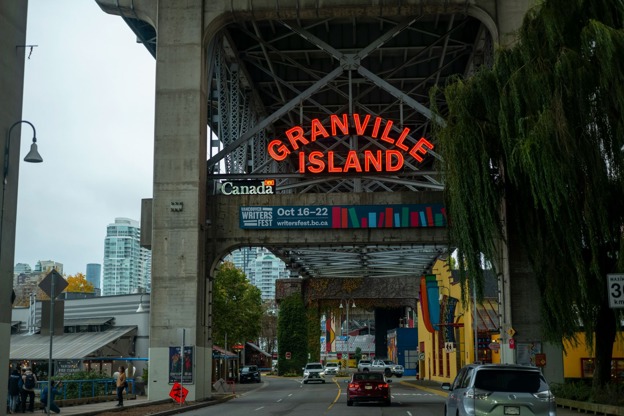
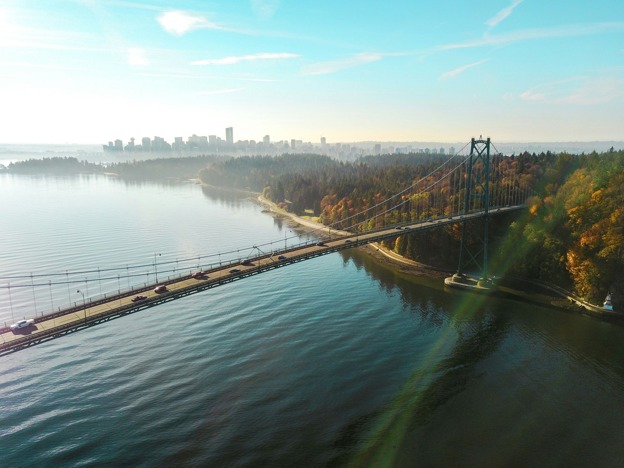
Vancouver is the natural starting point for this route, and it's worth spending a day or two here before you hit the road. The city sits right where the West Coast meets the mountains, so you get a taste of both before you've even left the city limits.
A few ways to spend your time in Vancouver:
-
Stanley Park: One of the largest urban parks in North America, with a seawall trail that's perfect for walking or cycling on your first morning.
-
Granville Island: Home to the Public Market, packed with fresh, delicious food and local vendors, a great spot for lunch before picking up your RV.
-
Vancouver Art Gallery: A solid rainy-day option if the West Coast weather doesn't cooperate.
-
Whale watching: Several tours depart directly from Vancouver, offering a good introduction to the coastal wildlife you might spot again later on Vancouver Island.
Once you've picked up your RV, the drive out of Vancouver City feels like a shift in scenery almost immediately. Within an hour's drive, the skyline gives way to forested mountains and coastal inlets, setting the tone for the rest of the trip.
If you have extra time, a ferry from Vancouver connects to Vancouver Island, home to Victoria, Tofino, and some of the best whale watching in the country. It's a worthwhile detour if your trip allows for it, though this itinerary focuses on the inland mountain route.
A Scenic Day Trip to Joffre Lakes Provincial Park
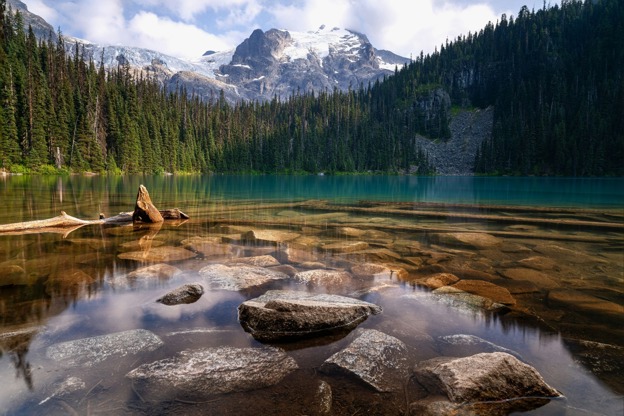
Heading north from Vancouver along the Sea to Sky Highway, Joffre Lakes Provincial Park is one of the best detours you can make before continuing deeper into the mountains. The park is known for a series of three turquoise lakes, each one more striking than the last, set against a backdrop of glaciers and dense forest.
The hike to all three lakes is a moderate 10km round trip, making it an easy day trip if you're already passing through on your way toward Whistler or the interior. Highlights include:
-
Lower Joffre Lake: A quick, flat walk from the parking lot, ideal if you're short on time or traveling with kids.
-
Middle Joffre Lake: About 4km round trip, with some of the best turquoise lake views in the park.
-
Upper Joffre Lake: The full 10km round trip, involving more elevation gain but rewarding hikers with glacier views and a quieter trail.
Because Joffre Lakes has become increasingly popular, arriving early in the morning is the best way to enjoy the trail without the midday crowds. A day use permit is required during peak season, so it's worth checking ahead before you go.
For RV travelers, the parking area near the trailhead is compact, so this is a stop better suited to a quick detour than an overnight stay. Plan to park, hike, and continue on toward your next destination the same day.
Exploring Banff National Park
From the coast, the route turns inland toward the Canadian Rockies, and Banff National Park is the natural first stop. As Canada's oldest national park, Banff sets the tone for the rest of the mountain leg of this road trip: turquoise lakes, dramatic peaks, and a townsite with just enough amenities to feel like a comfortable home base.
Banff sits along the Trans Canada Highway, making it an easy stop whether you're driving from Vancouver or starting your trip in Calgary. For RV travelers, several campgrounds are located within a short drive of the townsite, putting you close to trailheads without needing to pack up each night.
A few ways to spend your time here:
|
Activity |
Why It's Worth It |
|
Hike Tunnel Mountain |
A short, moderate trail with panoramic views over the Bow Valley |
|
Drive the Bow Valley Parkway |
A quieter, scenic alternative to the main highway, with good wildlife spotting |
|
Soak in the hot springs |
A relaxing way to end a day of hiking, with mountain views included |
|
Visit the townsite |
Restaurants, outfitters, and shops all within walking distance |
Banff National Park is also the gateway to several of the stops further along this itinerary, including Lake Louise, Moraine Lake, and the Icefields Parkway. Because it's one of the most visited parks in the Canadian wilderness, arriving early in the day (especially in peak season) goes a long way toward avoiding the busiest crowds.
Whether you spend two days or a full week here, Banff is the kind of place that rewards slowing down and returning to the same trail more than once.
Ride the Gondola up Sulphur Mountain
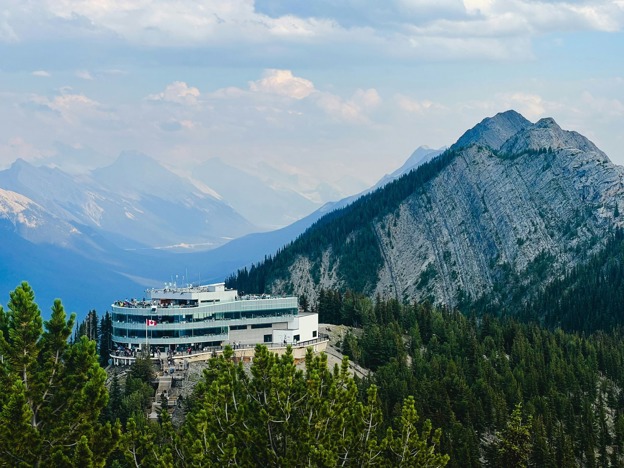
No visit to Banff is complete without heading up Sulphur Mountain, and it's an easy half-day activity to fit into your itinerary. A cable car whisks you from the base to near the summit in about eight minutes, saving your legs for the longer hikes elsewhere on this trip.
At the top, a boardwalk trail leads to the historic Sanson's Peak weather station, with panoramic views stretching across the Bow Valley and the surrounding peaks. On a clear day, you can see all the way to the Fairholme Range and beyond, one of the most incredible views on this entire route without requiring a strenuous hike to earn it.
A few tips for visiting:
-
Go early or late in the day: The gondola gets busy midday during summer, and early morning light makes for better photos.
-
Combine it with the hot springs: The Banff Upper Hot Springs sit just below Sulphur Mountain, making it easy to pair a soak with your gondola visit.
-
Dress in layers: Temperatures at the summit are noticeably cooler than in town, even in July.
For travelers short on time, Sulphur Mountain is one of the best ways to get a Rockies-worthy view without committing to a full day of hiking, making it a great stop for families or anyone easing into the trip.
See the Turquoise Waters of Moraine Lake
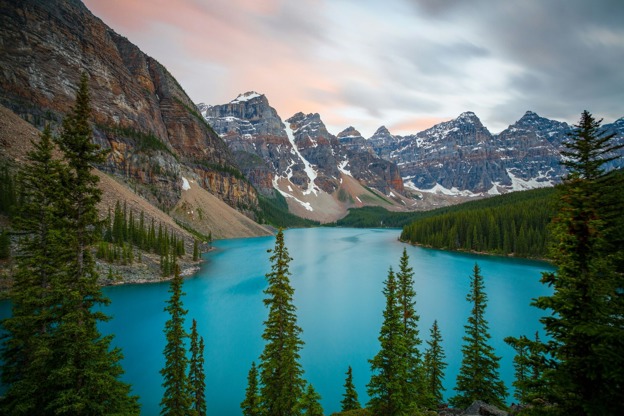
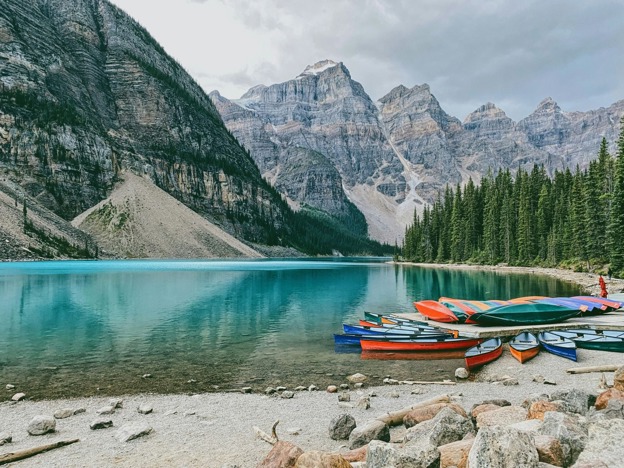
A short drive from Lake Louise, Moraine Lake is often considered the more dramatic of the two, and many travelers argue it's the single best view in all of Banff National Park. Set in the Valley of the Ten Peaks, its vivid blue color and jagged mountain backdrop make it one of the most photographed spots in the Canadian Rockies.
Because parking at Moraine Lake is extremely limited, private vehicles (including RVs) are no longer permitted to drive up on their own during peak months. Instead, visitors need to take a shuttle bus or a park-and-ride service from Lake Louise. It's worth checking current shuttle schedules before you go, since they can change year to year.
Once you arrive, a short walk up the Rockpile Trail offers the classic postcard view over the lake. For a longer outing, the Consolation Lakes trail continues past Moraine Lake into quieter terrain with far fewer visitors.
A few tips for visiting:
-
Book your shuttle in advance: Popular time slots fill up quickly during peak season.
-
Arrive early: Even with the shuttle system, the viewpoint gets crowded by mid-morning.
-
Bring layers: Mornings at this elevation can be chilly even in July and August.
Moraine Lake may require a little more planning than other stops on this itinerary, but it remains one of the most rewarding lakes in the Canadian Rockies and well worth the extra logistics.
Chase the Colors of Peyto Lake
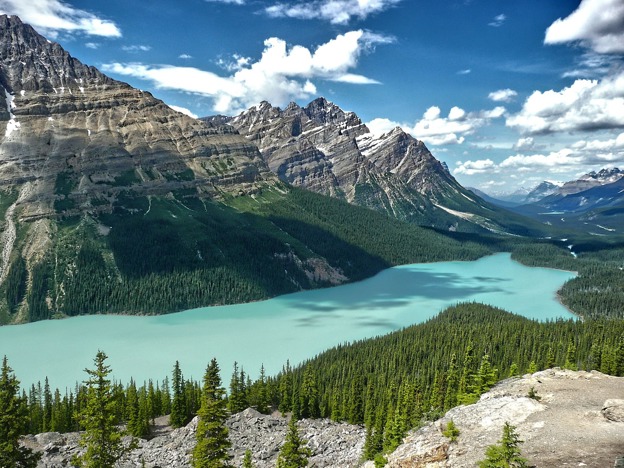
A short detour off the Icefields Parkway, Peyto Lake is one of the most striking stops on this entire route. Named for early trail guide Bill Peyto, the lake is famous for its unusual shape, often compared to a wolf's or fox's head when viewed from above, and its intensely turquoise color, created by glacial rock flour suspended in the meltwater.
The main viewpoint is an easy 10-minute walk from the parking area, making it one of the more accessible stops on this trip. For a quieter experience, continue slightly further along the trail to the Bow Summit lookout, which offers a similar view with noticeably fewer visitors.
A few tips for visiting:
-
Visit in the morning: Tour buses tend to arrive by mid-morning, so an early start means a much quieter viewpoint.
-
Bring a wide-angle lens: The lake's shape and color are best captured from the main viewing platform.
-
Pair it with a stop at Bow Lake: Just down the road, Bow Lake offers a similarly photogenic view with even fewer crowds.
Peyto Lake is proof that some of the most incredible views along this drive don't require a long hike to reach, just a short walk and good timing.
Discovering the Hiking Trails of Yoho National Park
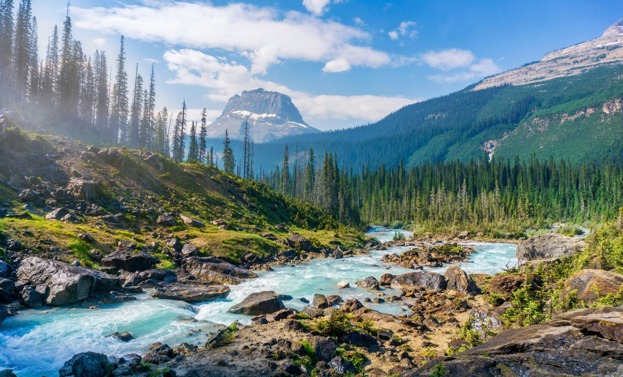
Just across the border into British Columbia, Yoho National Park is often overshadowed by its more famous neighbors, but it holds some of the best hiking trails on this entire route. Smaller and quieter than Banff or Jasper, Yoho rewards travelers willing to spend a day or two exploring beyond the main highway.
A few highlights worth building into your stop:
-
Emerald Lake: A vivid, glacier-fed lake ringed by mountains, perfect for a short walk around the shoreline or a canoe rental if you have time to spare.
-
Takakkaw Falls: One of the highest waterfalls in Canada, easily viewed from the parking area or up close via a short trail.
-
The Iceline Trail: Considered one of the best day hikes in the park, this trail climbs past a series of glaciers before looping back through the Yoho Valley floor.
-
Kinney Lake: A short, family-friendly walk with stone beaches ideal for a lakeside lunch stop.
-
Lake O'Hara: Widely regarded as one of the most beautiful lakes in Canada, though access is limited and requires advance permits or a long hike in.
Because Yoho is smaller than Banff or Jasper, it's easy to treat it as a day trip. But for hikers, staying an extra night opens up trails like the Iceline that are worth the additional time.
For RV travelers, campgrounds near Field, the park's only town, offer a convenient base for exploring without needing to backtrack to Banff each evening.
A Stop at Glacier National Park on the Way Back
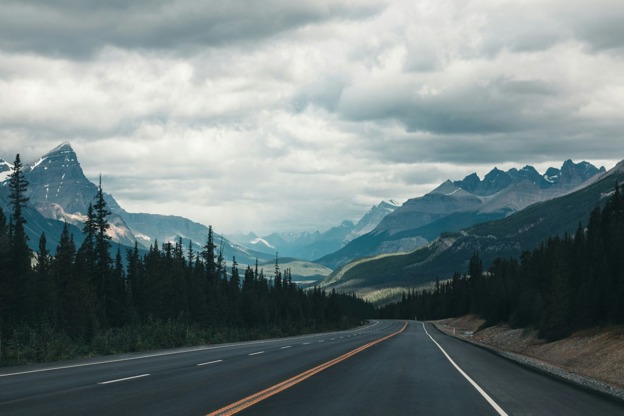
As the route turns back toward the coast, Glacier National Park offers one last dramatic stretch of mountain scenery before the landscape shifts back toward the Pacific. Not to be confused with its namesake in the United States, this Glacier National Park sits along the Trans Canada Highway through Rogers Pass, one of the most scenic and historically significant stretches of highway in the Canadian Rockies.
The park is known for its heavy snowfall and active avalanche control program, which makes for dramatic scenery but also means some trails and viewpoints are seasonal. Summer remains the best time to explore, when most trails are fully accessible and the surrounding area is at its greenest.
A few highlights worth stopping for:
-
Rogers Pass Discovery Centre: A small museum covering the park's railway history and ongoing avalanche safety program, a great stop to stretch your legs and learn a bit of Rockies history.
-
Hemlock Grove Trail: A short, easy boardwalk loop through old-growth forest, ideal for a quick leg-stretch.
-
Abbott Ridge Trail: For those with more time, a longer hike rewarding you with sweeping views over the Illecillewaet Glacier.
Wildlife is active in this area, so keep bear spray accessible and stay alert, especially around dawn and dusk when black bears are more frequently spotted near the highway.
Glacier National Park may be a shorter stop than Banff or Yoho, but it's a fitting last taste of the wilderness before the road trip winds back toward Vancouver.
Travel Tips for Your Western Canada Road Trip
Before you set off, a few practical details can make the difference between a smooth trip and a stressful one. Western Canada is vast, and while the scenery is worth every extra mile, a little planning goes a long way.
A few travel tips to keep in mind:
-
Book campgrounds and shuttles in advance. Popular stops like Wapiti Campground in Jasper and the Moraine Lake shuttle fill up quickly during peak season, especially if you're traveling between mid June and mid-October.
-
Pack for changeable weather. Even in the height of summer, mountain weather can shift from sunshine to rain (or snow at higher elevations) within hours. Layers are essential.
-
Carry bear spray and know how to use it. Encounters with black bears are uncommon but possible, especially near trailheads early or late in the day.
-
Purchase a national parks pass. If you're visiting multiple parks on this route, a discovery pass covering entry to Banff, Jasper, Yoho, and Glacier National Park is more cost-effective than paying daily fees at each stop.
-
Take regular breaks. Long stretches of driving, especially through the Icefields Parkway, can be more tiring than they look. Split up longer driving days where possible.
-
Consider a scenic flight. If your schedule and budget allow, a scenic flight over the Rockies offers a completely different perspective on the terrain you've just spent days driving through.
A little preparation before you go means more time enjoying the country's largest national parks and less time troubleshooting once you're on the road.
Start Your Western Canada Road Trip with Cruise America
Cruise America offers RV rentals with pickup locations across Western Canada, making it easy to start your trip in Vancouver, Calgary, or another gateway city nearby. With a range of vehicle sizes suited to couples, families, and groups of friends, plus support for one-way trips, Cruise America takes care of the logistics so you can spend your time exploring rather than planning.
Ready to hit the road? Browse Cruise America's RV rental options and start building your Western Canada road trip today.