The Top 18 U.S. Film Tourism Locations to See
- RV Destinations
- Road Trip
Streaming has changed the way people plan vacations. A decade ago, film tourism meant flying to one iconic destination, snapping a photo, and going home. Today, it looks different. Set jetting, the practice of chasing filming locations from your favorite movie and television series, has been gaining traction as a popular trend in American travel, and it rewards a different kind of trip: one built around movement, not a single city.
Set Jetting: The Travel Trend Behind This List
The shift traces back to what tourism research now calls the White Lotus effect. When viewers spent months at home streaming shows shot in idyllic locations, wanderlust followed close behind. Movies and TV shows stopped being passive entertainment and started functioning as unpaid destination marketing. A billboard advertises one spot for a limited run; a hit television series can circle the globe for years, quietly building tourist demand long after the season finale airs.
That demand is turning into real money:
-
The global film tourism market is valued in the tens of billions of dollars today, with steady growth projected over the next decade
-
Tourism boards and film commissions are courting productions more aggressively than ever, offering incentives specifically to draw future film tourists
-
The entertainment industry and the tourism industry have effectively merged into one growth engine, with local economies near hit filming locations along for the ride
But here's the gap almost no one talks about: most film tourists are still being pointed toward the same handful of overexposed attractions, think Central Park, the Hollywood Walk of Fame, or a single studio tour. What gets left out are the dozens of filming locations scattered across small towns, national parks, and rural backroads: places that were never built for a fly-in, fly-out weekend. They're built for a road trip. That's exactly where this list starts.
How the Film Industry Impacts Travel Across the U.S.

It's easy to underestimate how directly a single production can reshape a place. A show films for a few months, wraps, and moves on, but the tourism effect often just gets started. Once a location airs on screen, it becomes a recognizable tourist destination almost overnight, and the local tourism boost can outlast the show itself by years.
A few patterns show up again and again when a hit production puts a place on the map:
|
What happens |
Real-world example |
|
Small towns see a surge in visitors and new businesses |
Senoia, Georgia grew from a handful of storefronts to well over a hundred after The Walking Dead filming put it on the map |
|
Local governments create incentive programs to attract more productions |
States offering tax credits have seen measurable economic development tied directly to film and TV production |
|
Ranches, diners, and small attractions rebrand around their screen history |
Working ranches that hosted Western films and shows built entire tourism businesses around guests wanting the on-screen experience |
|
Off-season slumps shrink as fans visit year-round |
Locations tied to a beloved show often see steadier, less seasonal visitor traffic than typical seasonal attractions |
This is the part of film tourism that rarely gets covered: it isn't just about famous landmarks. Some of the most meaningful economic impact happens in local communities that had little tourism infrastructure before a production crew showed up. A diner, a barn, a stretch of highway, any of these can become a specific location fans plan entire trips around.
That's also why this trend fits RV travel so well. A single filming location rarely justifies a flight and a hotel stay on its own. But when a handful of them sit within a few hours of each other, driving becomes the obvious way to see them all, and to support the local economy in more than one town along the way instead of just one big city.
Inside the Global Film Tourism Market and Why the U.S. Leads
The numbers behind this trend are bigger than most travelers realize. Industry analysts estimate the global film tourism market at roughly $71.6 billion in 2026, with projections putting it near $157.5 billion by 2036, a growth rate of about 8.2% annually. That kind of growth doesn't happen by accident. It reflects a tourism industry that has learned how valuable a hit show or movie can be as free, long-lasting destination marketing.
The United States sits at the center of this shift. The country holds a significant share of the market, supported by Hollywood's global content dominance and the highest density of recognizable filming locations. A few forces explain why:
-
Production volume: More shows and movies are filmed across U.S. states than almost anywhere else, spreading filming locations far beyond the coasts
-
Film commission incentives: States actively compete to attract productions with tax credits, which indirectly builds tomorrow's popular tourist destinations
-
Streaming reach: A film industry shaped by streaming platforms means shows now reach global audiences instantly, turning a rural filming spot into a bucket-list stop almost as soon as an episode airs
Here's the disconnect, though. Despite the U.S. leading this market, most film tourism coverage still treats it as a city-by-city list: Los Angeles, New York, maybe Atlanta. That leaves a huge share of American filming locations, the ones spread across state parks, small towns, and rural highways, essentially invisible to travelers, even though tourism boards in those areas would welcome the traffic.
That gap is the opportunity. An RV doesn't care whether a filming location sits inside city limits or seventy miles down a two-lane highway. It can reach both in the same trip, which is exactly the kind of travel this growing market hasn't fully caught up to yet.
Movie Tourism by RV: Why Road Tripping Beats Flying for Set Jetters
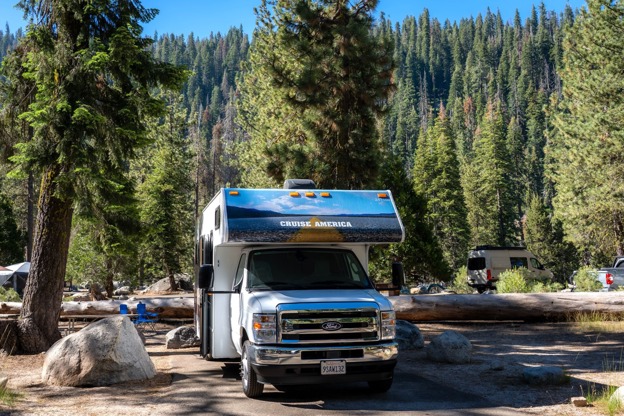
Most movie tourism content is written for a traveler with one flight and one hotel booking. Fly in, visit the site, fly home. That model works fine for a single landmark, but it falls apart the moment a fan wants to explore more than one filming location on the same trip, which is increasingly what today's film tourists actually want.
An RV solves that problem in a way flying simply can't:
-
No single home base required. Instead of picking one city and radiating out, an RV lets travelers move the whole trip forward, sleeping closer to the next movie location each night
-
Remote spots become realistic stops. Plenty of iconic scenes were filmed well outside major airports, in small towns, on ranches, or along scenic highways that a rental car day trip barely covers and a flight can't reach at all
-
Built-in flexibility around off-season travel. Many of these locations see lighter crowds outside peak summer months, and an RV trip can shift dates easily to catch a specific location at its best, without rebooking flights or hotels
-
Lower cost per stop. Splitting one trip's cost across several destinations beats paying for airfare and lodging to visit a single spot
This is also where guided tours and themed tours fit into the bigger picture. Plenty of the locations ahead have local outfitters offering short, on-the-ground tours once travelers arrive. An RV trip doesn't replace that experience; it sets it up: drive to the town, park for a night or two, then explore on foot or join a local tour before moving on to the next stop.
The list below is organized by region for exactly this reason. Group the right locations together, and a single road trip can hit four or five filming locations that would otherwise require four or five separate vacations.
West Coast Filming Locations Worth the Drive
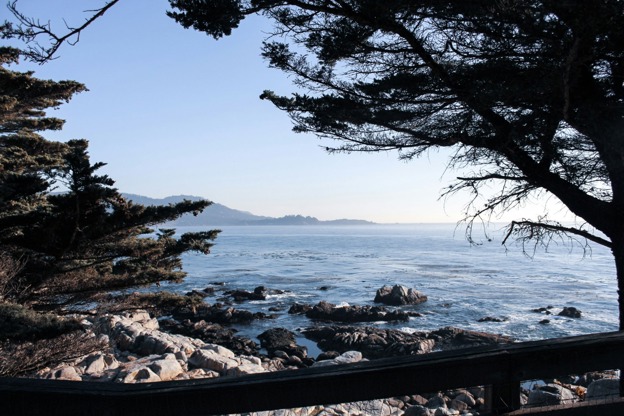
The Pacific Northwest and Northern California hold some of the most famous filming backdrops in the country, and almost none of them require a big city stop to reach. This stretch is where a coastal drive and a set jetting itinerary line up almost perfectly.
|
Movie location |
Country's film connection |
Best time to visit |
Nearby RV camping |
|
Astoria, Oregon |
The Goonies (1985) |
Late spring through early fall, before coastal fog thickens |
Fort Stevens State Park campground, a short drive from the Goonies house and downtown Astoria's self-guided filming location tour |
|
North Bend and Snoqualmie, Washington |
Twin Peaks (1990-91, 2017 revival) |
Year-round, though fall foliage matches the show's moody tone |
RV sites in and around the Snoqualmie Valley, close to Snoqualmie Falls, the Salish Lodge, and the Twede's Cafe diner made famous by the series |
|
Bodega Bay, California |
The Birds (1963) |
Spring and fall, when the coast is quieter and less foggy |
Doran Regional Park or Bodega Bay RV Park, both minutes from the schoolhouse and church seen in the film |
|
Jedediah Smith Redwoods State Park, California |
Star Wars: Return of the Jedi (Endor scenes) |
Summer, when the Jedediah Smith Campground opens for reservations |
The park's own campground sits right under the old-growth canopy, though rigs are limited to 25 feet |
A few things stand out looking at this stretch as a whole. First, these are specific locations where the towns themselves lean into their film history rather than downplaying it: Astoria runs a self-guided Goonies tour, and Snoqualmie's city hall displays original artwork tied to the show. Second, this route rewards travelers heading north or south along Highway 101, since all four sit within a reasonable drive of each other along the coast.
One practical note: Jedediah Smith's campground has no hookups and a strict 25-foot rig limit due to narrow, historic roads built in the 1930s. It's worth checking rig size against campground specs before locking in a route, since not every filming location town is built for larger motorhomes.
Southwest Travel Destinations Straight Off the Screen
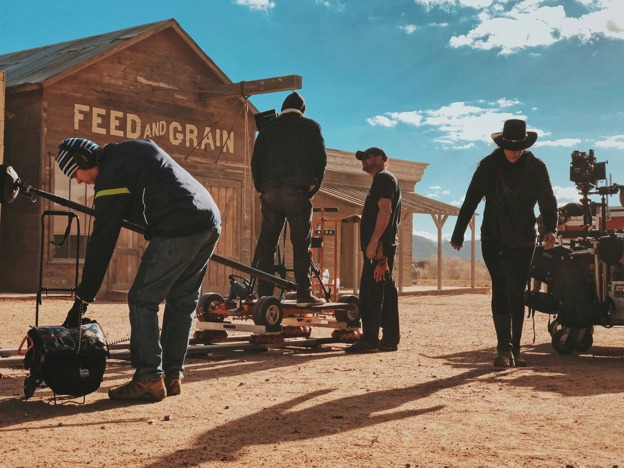
The desert Southwest has been a backdrop for movies and television for decades, and this is one region where the terrain itself does most of the storytelling. It's also some of the most naturally RV-friendly ground in the country: wide open highways, dramatic pull-off views, and towns spaced just far enough apart to justify sleeping somewhere new each night.
|
Movie location |
Films featured |
Best time to visit |
Nearby RV camping |
|
Monument Valley, Utah/Arizona border |
Forrest Gump, decades of Western films |
Spring or fall, when desert heat is manageable |
Goulding's Campground, minutes from Forrest Gump Point on Highway 163 |
|
Moab, Utah |
Thelma & Louise, Indiana Jones, Mission: Impossible |
Spring and fall shoulder seasons avoid peak summer crowds |
Moab Valley RV Resort, close to Arches National Park and Dead Horse Point State Park, where the film's final scene was shot |
|
Albuquerque, New Mexico |
Breaking Bad and Better Call Saul |
Fall, timed around the Albuquerque International Balloon Fiesta if travelers want two attractions in one trip |
American RV Resort or High Desert RV Park, both a short drive from visit filming locations like the A1A Car Wash and Twisters restaurant (Los Pollos Hermanos) |
A pattern worth noting here: none of these three built new tourist infrastructure specifically because of the production. Instead, existing towns absorbed the attention. Albuquerque's tourism board now runs an official self-guided map and RV-style tour bus specifically for Breaking Bad fans, while Moab simply added a movie locations brochure to its existing visitor center. That's a much lighter lift for local communities than building something from scratch, and it also means these towns have plenty of everyday services (fuel, groceries, repair shops) that purely tourist-driven attractions sometimes lack.
One logistics note: distances between stops run longer out here than on the coast, often two to four hours between towns. That works in an RV's favor since travelers aren't racing to make a hotel check-in window, but it's worth budgeting fuel and water stops accordingly on the open stretches between Moab and Albuquerque.
Midwest Movie Sets and the Local Tourism Boom They Created
Some of the most powerful local tourism stories in this list come from the Midwest, where a single production turned a quiet town into a bucket-list stop, often permanently.
|
Movie location |
Films featured |
Best time to visit |
Nearby RV camping |
|
Dyersville, Iowa |
Field of Dreams |
Spring through fall, when the site is open daily and hosts tournament games |
New Wine Park Dubuque County, right in Dyersville, or Rustic Barn Campground RV Park close to town |
|
Woodstock, Illinois |
Groundhog Day |
Early February, timed to the town's own annual Groundhog Days festival, or any season for the quieter self-guided tour |
Chicago Northwest KOA in nearby Union, about 30 minutes from Woodstock Square |
|
Cleveland, Ohio (Tremont neighborhood) |
A Christmas Story |
November and December for the full seasonal atmosphere, though the house and museum run year-round |
Streetsboro/Cleveland KOA, roughly 35 to 40 minutes from the house and museum |
What makes these three worth grouping together isn't just that they're all in driving distance of each other across Iowa, Illinois, and Ohio. It's that each town made a deliberate choice to build its identity around the film rather than treat it as a one-time novelty. Dyersville's Field of Dreams site now hosts youth tournaments and even MLB games on the same field from the movie. Woodstock throws an annual festival built entirely around its Groundhog Day connection, complete with cast reunions. Cleveland's Christmas Story house doesn't just offer tours: fans can book an overnight stay in Ralphie's actual bedroom.
That kind of hands-on, participate-not-just-photograph experience is exactly what separates lasting local tourism wins from short-lived novelty stops, and it's a big part of why these towns still draw crowds decades after the cameras left. For RV travelers, it also means longer, more satisfying stops. These aren't quick drive-by photo spots. Plan for a half day or more at each one.
How the South Became a Film Industry Powerhouse
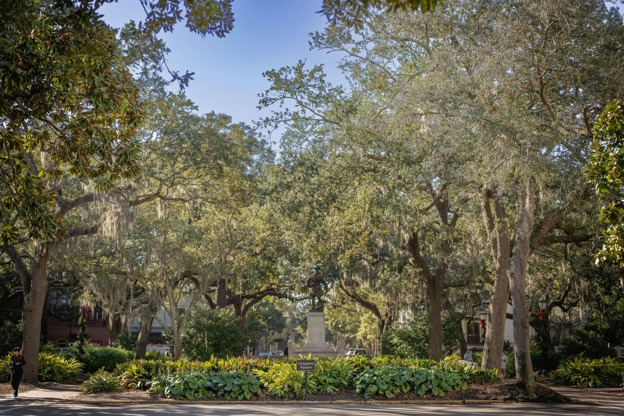
No region has leaned into the film industry quite like the South. Tax incentives brought decades of productions here, and small towns from Georgia to Louisiana have leaned into their screen history as a real part of their identity, not just a footnote.
|
Movie location |
Films featured |
Best time to visit |
Nearby RV camping |
|
Savannah, Georgia |
Forrest Gump (Chippewa Square bench scenes) |
Spring or fall, when humidity is lower and the historic squares are walkable |
Skidaway Island State Park, about 15 to 20 minutes from downtown |
|
Lake Lure, North Carolina |
Dirty Dancing |
Summer, timed to the town's annual Dirty Dancing Festival |
Hickory Nut Falls Family Campground, open April through October, close to Chimney Rock |
|
Hildebran, North Carolina |
The Hunger Games (District 12) |
Spring through fall, when guided tours of the preserved mill village run daily |
Lake Hickory RV Resort, a short drive from the site |
|
Natchitoches, Louisiana |
Steel Magnolias |
Fall through winter, especially around the town's well-known Christmas festival |
Grand Ecore RV Park, minutes from the historic district and Cane River plantation homes featured in the film |
What sets the South apart from other regions on this list is scale. This isn't one town that got lucky with one production; it's a region where local communities actively market their film industry ties year-round. Lake Lure runs an annual festival built entirely around the Dirty Dancing movie. Natchitoches maintains an official self-guided film trail through its historic district. Even a mill village that closed in 1907 now runs daily paid tours specifically because of The Hunger Games series.
That density matters for trip planning. All four of these stops sit within a reasonable multi-day loop across Georgia, the Carolinas, and Louisiana, which makes the South one of the easiest regions on this list to string together into a single extended RV route rather than a series of one-off day trips.
Northeast Sets and the Tourism Industry They Built
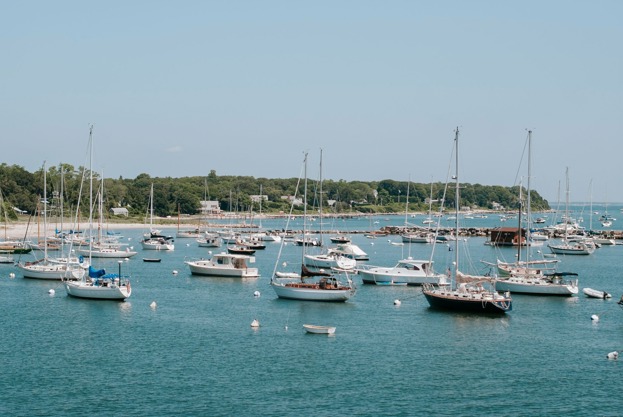
The Northeast rounds out this list with a mix of coastal charm and small-town character, and it's the region where movie tourism has quietly become part of the tourism industry itself, baked into how these towns market themselves year-round.
|
Movie location |
Films featured |
Best time to visit |
Nearby RV camping |
|
Mystic, Connecticut |
Mystic Pizza |
Summer through early fall, when the drawbridge and harbor are liveliest |
Mystic KOA Holiday in nearby North Stonington |
|
Martha's Vineyard, Massachusetts |
Jaws |
Summer, the only season the island's single campground is open |
Martha's Vineyard Family Campground in Vineyard Haven, reachable by ferry with an RV |
|
Camden, Maine |
Peyton Place |
Summer and early fall for Mt. Battie views and Penobscot Bay weather |
Camden Hills State Park Campground, at the base of Mt. Battie itself |
|
Newport, Rhode Island |
The Great Gatsby, True Lies, High Society |
Late spring through fall for mansion tours and the Cliff Walk |
Newport RV Park in nearby Portsmouth, about 20 minutes from the mansions on Bellevue Avenue |
One logistics note that separates this region from the rest of the list: Martha's Vineyard requires a ferry crossing for any vehicle, RVs included, and the island has exactly one campground with a limited season. It's worth booking that stop well ahead of a trip, and building the rest of a Northeast route around it rather than trying to fit it in last minute.
Taken together, these four destinations show how differently movie tourism plays out depending on the film's age. Jaws is 50, and Peyton Place is pushing 70, yet both towns still draw fans every summer, proof that this kind of tourism industry impact doesn't fade quickly once a place earns its reputation on screen.
Turn Your Favorite On-Screen Moments Into a Real RV Road Trip
Every location on this list rewards travelers willing to drive rather than fly. That's the real story behind set jetting in today's time: the best filming locations aren't clustered in one city waiting for a direct flight. They're spread across coastlines, deserts, and small towns that only make sense to see one after another.
An RV turns that scattered map into one continuous trip. Wake up under the redwood canopy where Return of the Jedi's Endor scenes were shot, then be in Bodega Bay by dinner. Chase Breaking Bad locations through Albuquerque one day and stand at Forrest Gump's stopping point the next. That's a trip a flight and a rental car can't offer.
Ready to plan your own set jetting road trip? Book a Cruise America RV and turn any stretch of this list into a real itinerary.